
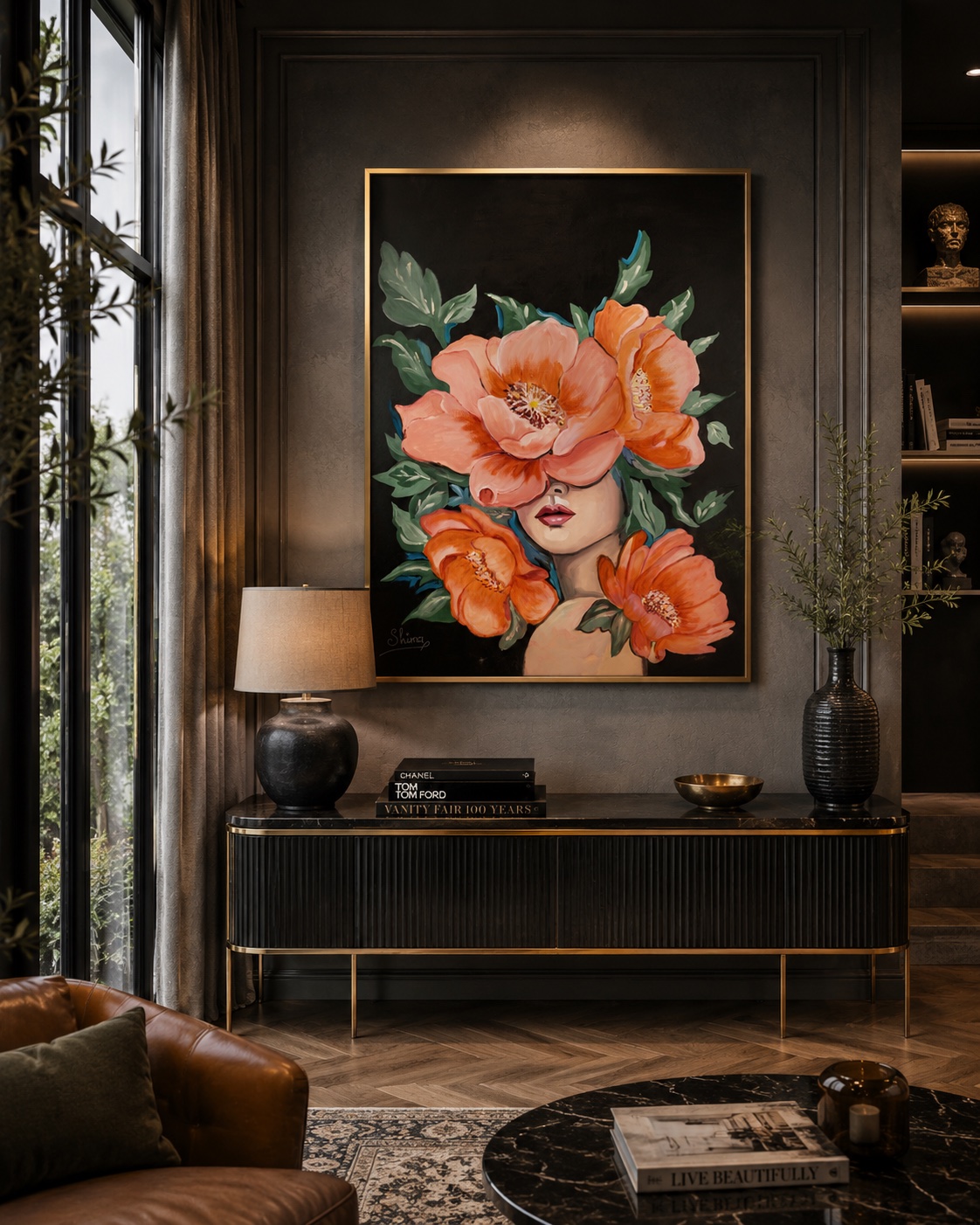
Choosing original art is less about finding something that matches a room perfectly and more about finding a work you want to keep looking at. The strongest choice usually begins with an emotional response, then becomes practical through scale, placement, framing and delivery.
Start with the work, not the colour chart
A painting can connect with a space without repeating every colour already in the room. Look first at mood, movement, subject and the way the work holds your attention. A small amount of visual contrast often gives a room more character than an exact decorative match.
Choose a scale that belongs in the room
Before buying, measure the wall and note nearby furniture. A work above a console, sofa or bed should feel visually anchored rather than floating in a large empty area. If you are deciding between two sizes, mark the outline on the wall with removable painter's tape and view it from the main entrance to the room as well as from your usual seating position.
Consider viewing distance and light
Detailed work rewards closer viewing, while larger compositions can carry across a room. Natural light can change throughout the day, so check the proposed wall in both daylight and evening light. Original paintings should be kept away from prolonged direct sunlight and excessive heat or moisture.
Treat framing as part of the presentation
Framing changes the visual boundary around a painting. A restrained frame can make the work feel architectural and finished without competing with it. When a work is available with different presentation options, compare them against the wall colour, nearby materials and the overall level of contrast you want in the room.
Preview the placement before committing
Use the gallery's wall-preview tools where available, or upload a room photograph and compare proportions. Digital previews are most useful for scale and placement rather than exact colour matching, because screens and room lighting vary.
Check the practical details
Before checkout, confirm the artwork dimensions, medium, support, availability, framing choice, delivery method and expected timing. For an original work, keep the certificate of authenticity and purchase documentation with your records.
When a commission is the better answer
If you love the visual language of the gallery but need a particular scale or a work developed for a specific space, a private commission can be a more considered solution. The commission process should confirm scope, dimensions, timing, price and presentation before work begins.
Original art does not need to solve every design decision in a room. It needs to earn its place there. Begin with the work you respond to, then use scale, framing and placement to let it sit naturally in the space.