
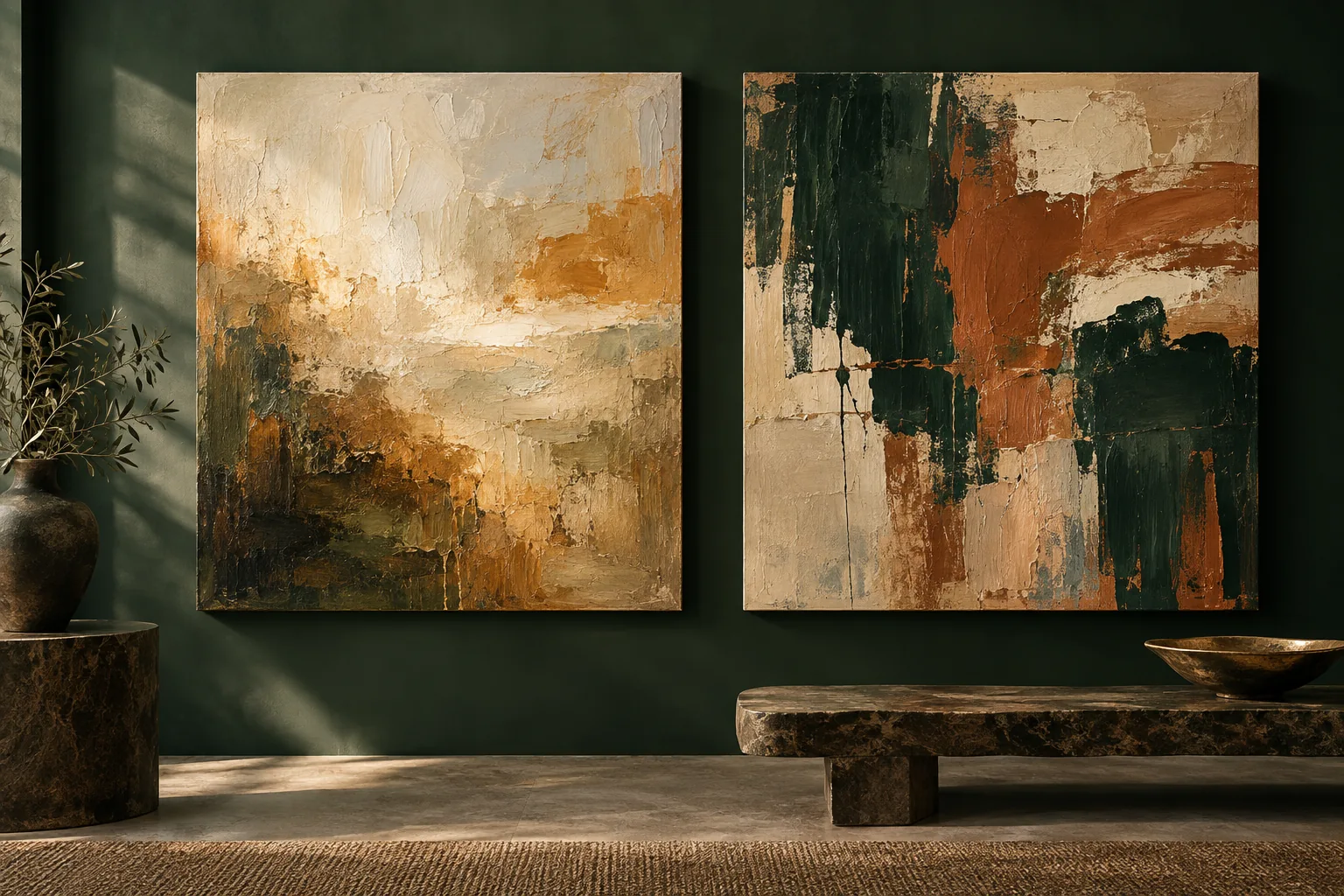
Editorial illustration: two approaches to colour and painted surface.
Oil painting or acrylic painting? For a collector, the answer is less about declaring a winner and more about understanding the work in front of you. Both mediums can produce an original painting with depth, energy and a lasting place in your home. The differences lie in how the paint is handled, how a surface can look and what questions are worth asking before you buy.
What is the difference between oil and acrylic paint?
Oil paint uses pigment in a drying oil; acrylic paint uses pigment in an acrylic polymer binder. Oil usually remains workable longer, making it possible to blend a passage gradually, revisit an edge or build translucent layers. Acrylic generally dries faster, which can suit crisp changes, successive marks and a more immediate way of working. These are tendencies, not rules: either medium can be subtle, richly layered, flat or highly textured.
Look beyond the label on an artwork listing. Stand back to take in the composition, then move closer to see how colour, edges and brushwork are actually used. A painting made in acrylic can feel soft and atmospheric; an oil painting can be strikingly direct.
Compare the surface, not a stereotype
Artists can work with thin glazes, opaque colour, broad marks or raised paint in either medium. Surface finish also depends on pigments, techniques, grounds and any coating chosen by the artist. Do not assume that every oil painting is glossy or that every acrylic painting has a uniform matte surface. If a photograph makes the texture hard to judge, ask for a side-lit detail image or a short video of the actual work.
Explore Shima's acrylic-on-canvas work Hidden in Bloom .
Which medium is better for your space?
Start with the image and the feeling it creates, then consider scale. A quiet painting may give a busy room breathing space; a more assertive composition can bring focus to an otherwise restrained interior. Check the actual measurements and whether they include the frame. If you are comparing works online, look at both an overall photograph and a close view of the painted surface.
Neither medium belongs only in one kind of room. A collector choosing bedroom art may favour a gentler palette; another may want contrast and movement. The medium matters, but the artwork's composition, placement and relationship with natural light matter just as much. Our bedroom wall art guide offers a room-specific starting point.
What about longevity and care?
Both oil and acrylic paintings can be cared for as original works. Their materials behave differently, so there is no universal cleaning or varnishing instruction that is safe for every painting. Ask what support the artist used, whether a surface coating is present and how the work should be handled. Keep it away from prolonged direct sunlight, damp locations and heat sources. Avoid touching the painted surface or applying water and household cleaners; if treatment is needed, consult a qualified paintings conservator.
When you buy an original, keep the artwork's medium, dimensions and any care guidance with your purchase records. The Smithsonian Museum Conservation Institute's painting care guidance is useful for understanding why handling and display conditions deserve attention.
Questions to ask before collecting
Is this the original painting, and which medium and support were used?
What are its unframed and framed dimensions?
Can I see a close photograph of the surface and sides?
Is the painting ready to hang, and what presentation options are available for this particular work?
What care information comes with the artwork?
Choose the oil or acrylic painting that continues to hold your attention after the first impression. Let the medium explain something about its making, rather than substitute for your own response to the work. Explore Shima's current original paintings , and check the medium on each artwork page.