
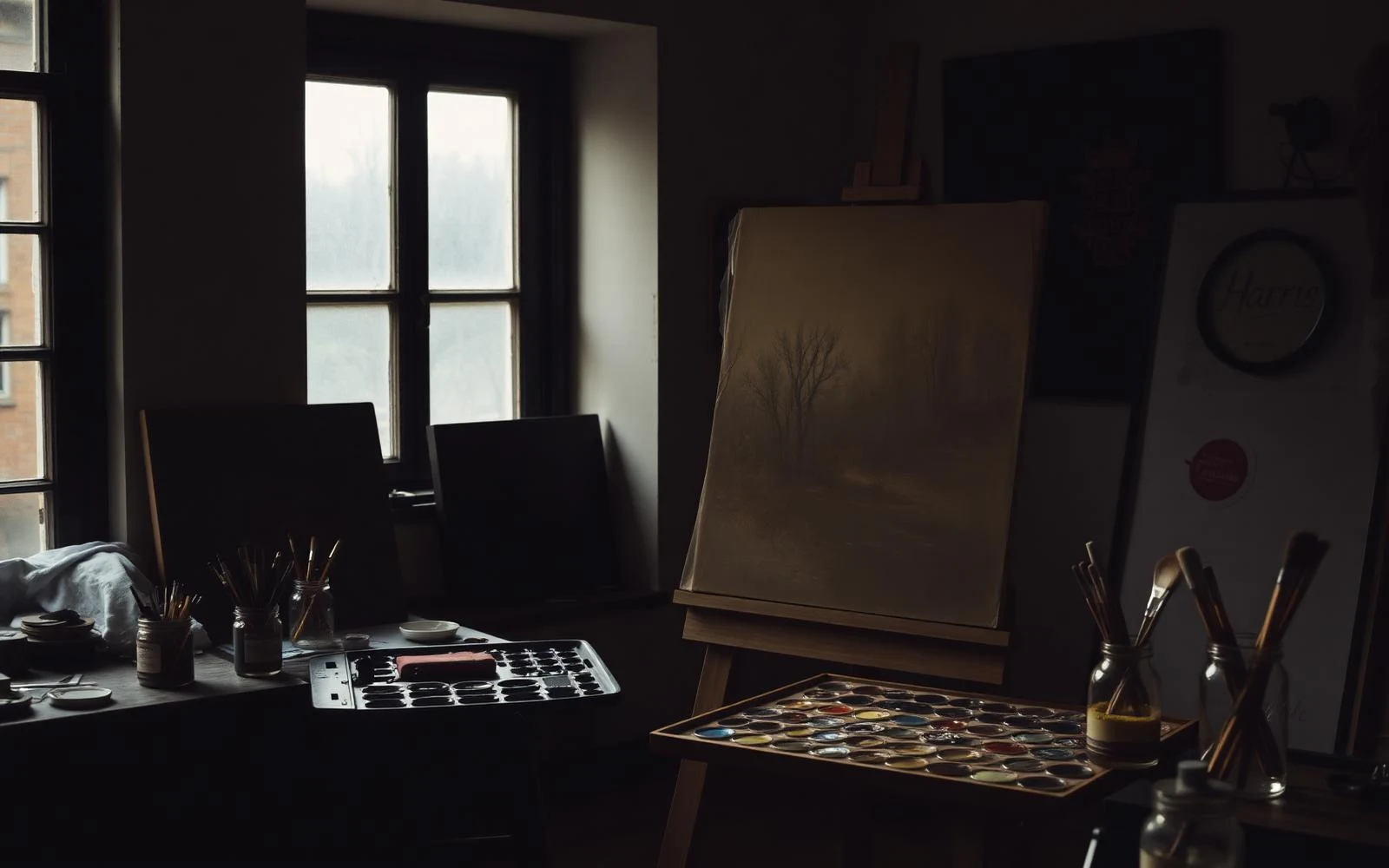
Real texture becomes part of the artwork's presence, changing subtly as light moves across the surface.
Textured wall art has become increasingly visible in contemporary interiors because it adds something flat imagery cannot fully reproduce: a changing relationship with light. Brush marks, impasto, layered medium and raised surfaces create shadows and highlights that shift as you move through a room.
For collectors, texture is more than a decorating trend. In an original painting it can reveal how the work was made, where the artist slowed down, where material was built up and where the surface was deliberately left quiet.
What is textured wall art?
The phrase covers a wide range of work. Some pieces use thick oil or acrylic paint, modelling medium, plaster-like compounds, fabric, paper or mixed media. Others create the appearance of texture photographically or through printing. Both can be visually effective, but they are not the same object.
With an original textured painting, the relief exists physically on the surface. You can see edges catch the light, small peaks cast shadows and layers overlap. This physical variation is one reason textured originals often feel more dynamic in person than they do on a screen.
Impasto is one of the most recognisable forms of texture
Impasto describes paint applied thickly enough for brush or palette-knife marks to remain visible. The surface becomes part of the composition. A stroke can carry direction, energy and weight at the same time as it carries colour.
Texture does not have to be dramatic. A painting may combine smooth passages with a few raised areas so that certain forms catch the light while others recede. Often the contrast between flat and textured areas is more interesting than covering the entire surface with heavy relief.
Why textured wall art works so well in interiors
Texture introduces material character into a room. In interiors dominated by smooth stone, glass, plaster or clean cabinetry, a visibly worked painting can add warmth and evidence of the hand. In a more layered interior, it can echo natural materials such as timber, linen, wool or stone without needing to imitate them directly.
Because the surface changes with light, textured art can also create movement without relying on a busy composition. A restrained painting with subtle relief may feel quiet in diffuse daylight and more dramatic under evening lighting.
Choose scale carefully
Texture has more impact when the viewer can experience it at an appropriate distance. A very small textured work on a large wall may lose the quality that makes it special. A larger painting can allow the surface to read from across the room and then reveal finer details as you approach it.
For artwork above a sofa or console, a useful starting point is a visual width of roughly two-thirds to three-quarters of the furniture beneath it. On a feature wall, use painter's tape to test the dimensions and check how much negative space remains around the work.
Lighting can completely change the surface
Texture becomes most visible when light arrives from a slight angle. This creates small shadows along raised areas and makes the relief easier to read. Very flat frontal lighting can reduce that effect, while harsh spotlights may create distracting glare.
Natural daylight can be beautiful, but original paintings should not sit in prolonged direct sunlight. A controlled wall light or ceiling light can provide a more consistent evening presentation. If possible, evaluate the work in both daylight and artificial light before deciding on the final position.
How to tell real texture from printed texture
Online photographs can make this difficult, so read the artwork description carefully. Look for information about the medium and process. Terms such as impasto, palette knife, modelling medium, layered acrylic or mixed media usually describe physical surface treatment, but the listing should make clear whether the piece is an original painting or a reproduction.
Close-up photographs taken from an angle are useful because they show actual relief. If every image is photographed directly from the front and the product description is vague about materials, ask for clarification before buying.
Original textured painting or decorative textured panel?
There is a place for both, but the decision depends on what you want from the object. Decorative panels are usually designed primarily for colour, scale and interior coordination. An original textured painting carries the artist's individual decisions and exists as a unique surface rather than a repeated design.
If you are collecting original art, confirm whether the work is one of one, what materials were used, whether it is signed, how it should be handled and whether a certificate of authenticity is included. These details matter more than trend labels.
Frame texture without trapping it visually
Heavily textured work often benefits from a simple frame or a small visual gap around the edge. The purpose is to create a boundary without making the surface feel crowded. A restrained timber, black, white or metallic finish can work well depending on the palette and the room.
Some textured works are designed to remain unframed, particularly when the edges are finished as part of the painting. In that case, check the depth of the support and how the work will sit against the wall.
Where textured wall art works best
Living rooms: ideal for a statement painting where changing daylight can reveal the surface.
Dining rooms: texture can add warmth to spaces with hard materials such as stone, glass and timber.
Bedrooms: softer relief and quieter palettes can create depth without visual noise.
Entries: a textured work gives visitors a close viewing opportunity as they move past it.
Home offices: material detail can make a small room feel more considered and personal.
Care for a textured original gently
Raised surfaces can catch dust more easily than completely smooth paintings. Avoid rubbing, household cleaning sprays or wet cloths. A very soft, clean brush may be appropriate for light surface dust, but if a work is delicate, highly textured or valuable, professional conservation advice is the safer choice.
Keep original paintings away from persistent moisture, strong heat and prolonged direct sun. When moving the artwork, hold the frame or support rather than touching raised paint.
Do not choose texture only because it is trending
Textured wall art is receiving strong search interest, but the best reason to buy a textured original is still the same reason to buy any artwork: you respond to it. Surface effects should support the composition rather than replace it.
Look at the work from a distance, then look closely at the material. Ask whether the texture creates rhythm, emphasis or atmosphere. If it still interests you after the novelty of the surface has passed, it is much more likely to remain meaningful in your space.
Choosing textured art for your home
Start with scale, then consider how the surface will interact with the light in the room. Decide whether you want quiet relief or stronger impasto, and choose a frame that gives the work enough visual space. If you are new to original art, the guide How to Choose Original Art for Your Space explains the broader buying process.
You can also browse original paintings or explore private commissions if you need a particular scale or a work developed for a specific interior.